|
Welcome to the vedphoto blog! Here you can keep up-to-date on research (Fluid Lensing), exhibitions (Physics In Vogue and Reactive Reefs) and photo-shoots. Learn about the techniques and stories behind my images by searching for a location or keyword. That picture of fruit bats from Northern Madagascar - I had to wade waist-high in bat guano to get it! Always a humbling experience. Reactive Reefs/HiMARC Quadcopter Construction + TestingBy Leo Kheyn-Kheyfets, Ved Chirayath This past week we constructed and tested an Arducopter Quadcopter platform for aerial imaging tests of HiMARC's Fluid Lensing on underwater targets. Ultimately, we hope to image coral reefs through the water's surface as part of the Reactive Reefs project. This technology may help marine biologists study the bleaching effects of coral without having to dive down into the water. The people working on this project are Trent Lukazyk, who is engineering and flying the Quadcopter, and myself, Leo Kheyn-Kheyfets, who is helping with the engineering, photography and documentation of the Quadcopter systems as well as the HiMARC and Reactive Reefs teams.
After much anticipation, on June 24, we began working on our Arducopter Quadcopter. After some work, we were able to fully construct the Arducopter Quadcopter. Our next step was to calibrate both the Quadcopter and our R/C Controller with the provided Mission Planner software. After we had both the Quadcopter and Controller fully calibrated, we were ready to take it outside for a test drive. Putting the Quadcopter in "Stabilize Mode" we were able to get it off the ground with ease and flying through the air. While in the air, we used the "Loitering" and "Altitude" modes. After getting comfortable with the controls and flying the Quadcopter, the next day we were able to perform a full run with Quadcopter. Starting the run at 9:17 a.m., we were able to fly the Quadcopter in several modes till the battery got to low at 9:35 a.m. and we were not able to get it off the ground anymore. Going through the data log of the first full test, we found that during the 17 minute run, the battery power started at 12.3 V and ended at an 8.6 V where we were no longer able to lift it off the ground. After the battery voltage got down to 10 V, the battery started dying very quickly and got down to 8.6 V in a a matter of seconds. When the Quadcopter is just loiter, it is drawing 15 Amps, but during the maneuvers, it draws up to around 18 Amps. The Stabilization mode was used to take off, and works by trying to maintain a level aircraft. The Loiter Modeis used to hold the Quadcopter in all x,y, and z directions, and then returns to a set point position. While the Altitude mode works at keeping the Quadcopter at the same altitude and only moving the Quadcopter in the xy plane, and the throttle then changes the altitude. Here are some logs produced from the first full run:
Some photos from the construction and testing:
Y2E2 Art & Science Exhibition Today from 15:00-17:00 featuring Reactive ReefsCome join us today at Stanford's Y2E2 Art & Science Exhibition from 15:00-17:00 and see some of the latest results from the Reactive Reefs project using HiMARC Fluid Lensing to image subsurface marine corals.
Hours: Friday, May 31st 15:00-17:00 Info: Admission free. Y2E2 Red Atrium, near Coupa Café.
Año Nuevo State Park + elephant seals!Thank you KZ for putting together this adventure!
Weaner pups
HDR Panorama of Año Nuevo State Park with elephant seals in the foreground
Weaner pup noises:) Full gallery
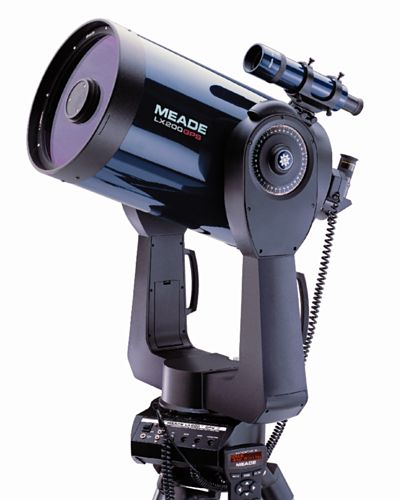
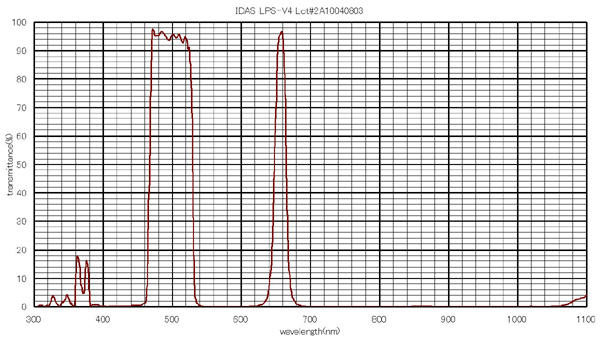
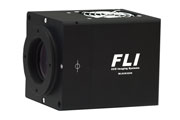
HiMARC Ground Testing Equipment & SoftwareLots of folks have been asking what instruments, software and equipment I use for HiMARC ground tests and my astrophotography in general. I shall try to keep this list up to date as the project goes on and my inventory changes. Most items below can be purchased from optcorp.com who have loaned me much of my testing equipment in support of HiMARC!
Physics In Vogue and Space Vikings featured in Stanford Arts Bulletin!
Physics In Vogue: Space Vikings
Ved Chirayath's photography exhibition sheds light on contemporary physics discoveries by combining fashion photography, laboratory grade optical effects and scientific accuracy to create visual representations of complex science. Read more |














 Pixinsight